The trust in Dynasty Stomatology is built on a combination of many years of experience and an individual approach to every patient. We understand that a visit to the dentist is often accompanied by anxiety, so we place special emphasis on creating a comfortable and calm atmosphere where every patient feels safe.
The clinic is equipped with modern technology and uses advanced treatment methods, ensuring that procedures are carried out with maximum precision, efficiency, and comfort. All materials undergo strict quality control, and our doctors regularly improve their qualifications to offer only the most up-to-date and proven techniques.
In addition, Dynasty Stomatology values long-term relationships with patients. Our goal is not only to solve the problem at hand but also to maintain the health of teeth and gums for years to come. Openness, honesty, and transparency are the key principles that have earned the clinic its reputation as a reliable dental partner.
Facts about Dynasty Stomatology:
✅ Over 10 years of successful work in dentistry.
✅ Hundreds of positive reviews from patients in [Страна в соответствии с регионом] and abroad.
✅ We use premium materials from leading global brands.
✅ We offer treatment under sedation and general anesthesia.
✅ A full range of services — from pediatric dentistry to complex surgical operations.
Dynasty Stomatology — trust, expertise, reliability, and care for the beauty of your smile.
Dynasty Stomatology’s doctors conduct medical reviews of all materials on the website to ensure their accuracy and practical value. Our authors and editors are experienced specialists in the fields of therapeutic, surgical, orthopedic, and pediatric dentistry. This approach allows us to maintain high professional standards and provide our readers with only verified, up-to-date, and useful information.
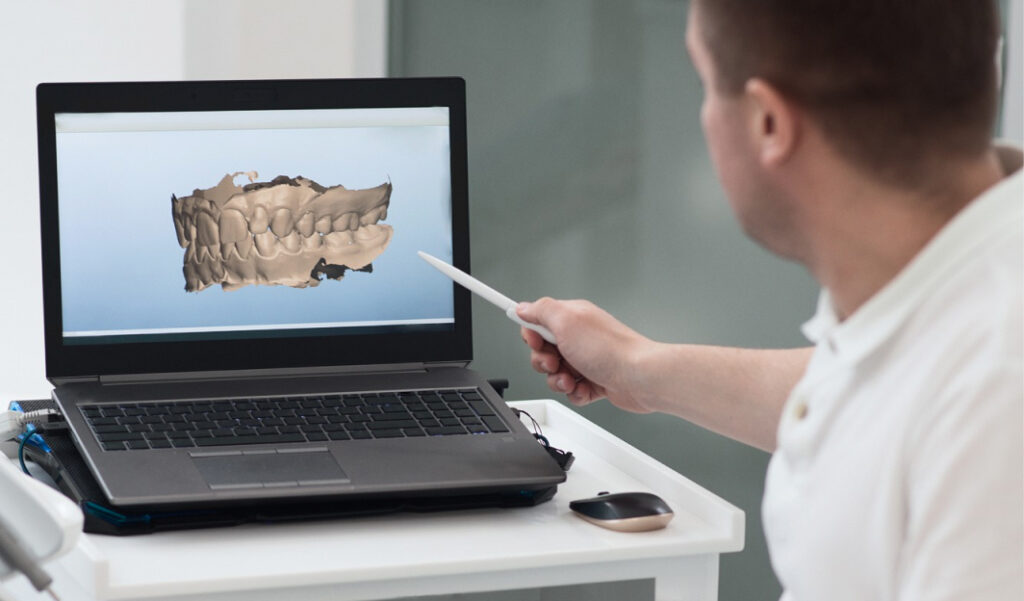
If you’ve ever experienced discomfort when taking impressions for dentures or implants, modern digital dentistry truly changes that experience. Instead of using uncomfortable materials and lengthy wait times, we use precise digital scanning, allowing the dentist to immediately see a complete picture of the condition of your teeth. The procedure takes minimal time, involves no gag reflex or discomfort, and delivers predictable and accurate results right from the treatment planning stage.
In this article, we’ll explore in detail what advanced dentistry is, the technologies behind it, and how it differs from traditional approaches. You’ll also learn which procedures are currently being performed using digital solutions and how they impact treatment comfort and accuracy.
What is Digital Dentistry?
Digital dentistry is a modern approach to the treatment and prevention of oral diseases based on the use of software, high-precision equipment, and digital data. Instead of manual methods and impressions, clinics use digital technologies to improve the precision, predictability, and personalization of treatment.
Advanced is based on the integration of technology across all stages of the process, from diagnosis to the final result. Modern dentists can visualize the treatment outcome, improve treatment comfort and accuracy, and deliver consistent results. These tools are advancing the entire field of dentistry.
Digital Dentistry vs Traditional Dentistry — Key Differences
Traditional dentistry relies heavily on physical impressions, manual measurements, and subsequent interpretation by a dental technician. This approach works, but it often leads to inaccuracies. Digital dentistry fundamentally changes how dental procedures are performed. Manual steps are now replaced by software solutions. This minimizes errors and achieves more accurate and predictable results.
One of the most noticeable differences is the method used to create impressions. Traditional materials can cause discomfort, trigger a gag reflex, and distort their shape over time. Digital impressions are captured using intraoral scanners and stored as precise digital data, eliminating the risk of deformation. This approach makes dental treatment more comfortable and easier to understand for patients.
Furthermore, digital processes allow clinics to operate as paperless practices, improving document flow, communication, and data security. This is especially helpful in complex clinical cases that require collaboration between multiple specialists.
The Core Technologies in Digital Dentistry
Digital dentistry is built on a complex set of technologies that work together as a unified system. Let’s take a closer look at each technology.
CAD/CAM systems
Modern CAD/CAM dentistry allows doctors to design and manufacture prosthodontics with high precision. Using dental CAD software, a digital model is created, after which the structure is manufactured using dental CAM milling equipment. This approach allows for a fully digital workflow and, in some cases, the fabrication of structures in a single visit.
Intraoral scanners
An intraoral scanner is used to obtain detailed images of teeth and soft tissues. Instead of taking impressions, the doctor performs a quick scan, creating a precise digital image of the oral cavity. The resulting digital scan improves patient comfort and simplifies communication between the clinic and the laboratory, minimizing errors.
Digital imaging and CBCT
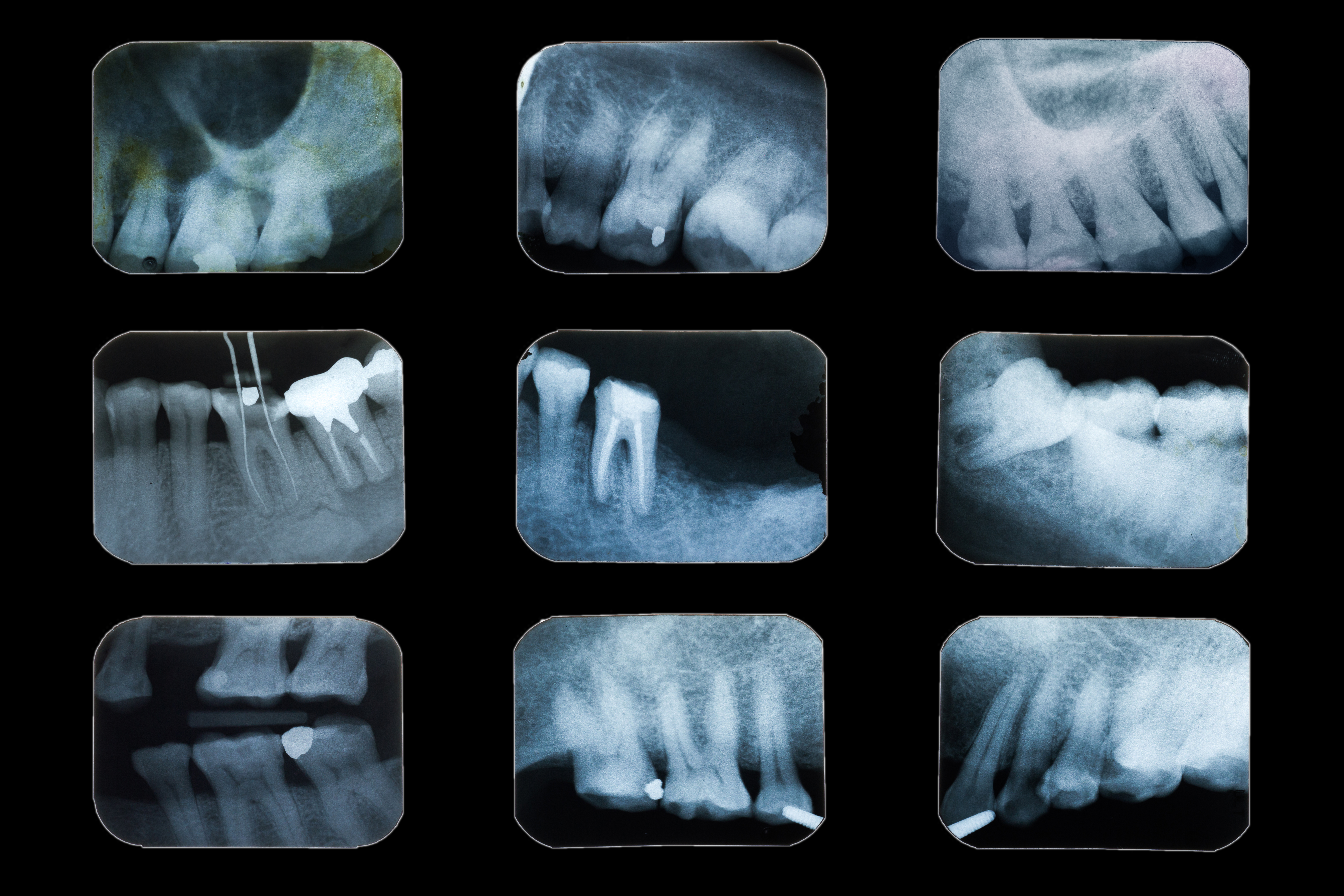
Modern diagnostic methods allow for the acquisition of three-dimensional images of anatomical structures. Dental imaging software combined with CBCT provides accurate diagnostics. This forms the basis for virtual treatment planning, particularly in surgery and orthodontics.
3D printing
3D printing technology makes it possible to produce models, temporary structures, and surgical templates directly in the clinic. This type of chairside dentistry reduces treatment time and increases process flexibility. 3D printing is also actively used to create surgical guides for dental implant procedures.
What Dental Treatments are Performed with Digital Dentistry?
Dentistry encompasses a wide range of modern dental procedures, including therapeutic, prosthetic, and orthodontic treatment. Digital technologies can be used for simple procedures as well as complex clinical cases.
Microprosthetic
Digital technologies enable the precise manufacture of inlays and onlays, improving their fit and durability. These solutions are referred to as digital prosthodontics.
Veneers
Using digital modeling, the doctor can show the patient the future result in advance. The digital smile design method allows for the shape, color, and proportions of the smile to be agreed upon before treatment begins.
Invisible orthodontics
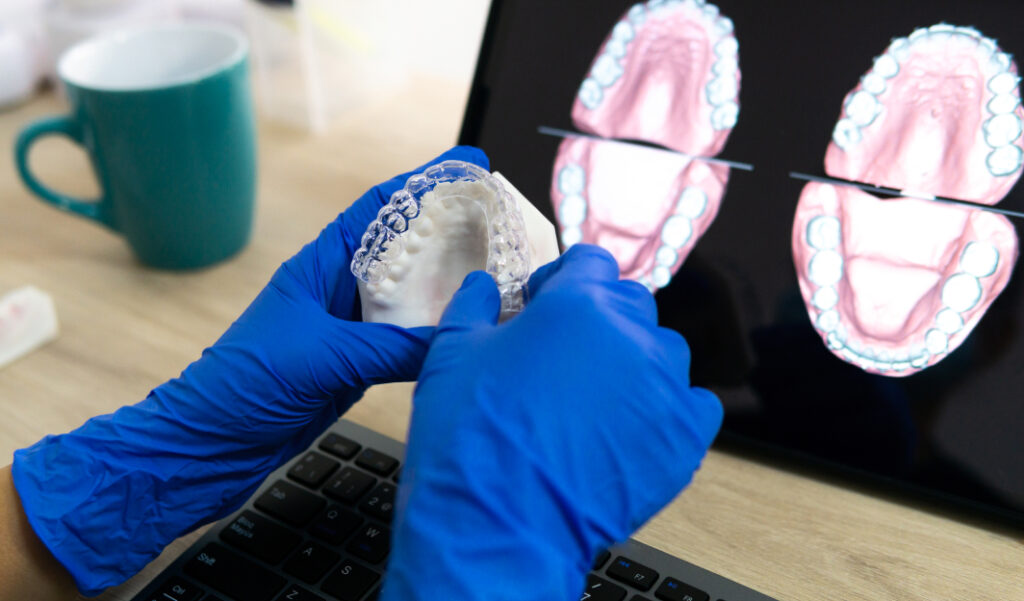
Modern aligners are created using digital orthodontics, allowing for step-by-step planning of tooth movement. Virtual simulations allow for predicting and better monitoring of the outcome.
How Digital Dentistry is Changing Patient Care
Digital technologies have significantly changed the way clinics interact with patients. Treatment plans have become more visual and understandable. Doctors can visually explain each step, which increases trust and patient engagement.
A modern treatment plan is no longer an abstract description. Patients can see the stages, timelines, and expected outcome even before treatment begins, which positively impacts the patient experience.
Benefits of Digital Dentistry for Patients
Dentistry significantly changes the patient experience, making treatment more comfortable, precise, and faster. Modern technologies improve the quality of procedures and reduce the stress and discomfort associated with traditional methods. Let’s look at the main advantages of digital dentistry:
The use of digital planning allows dental and prosthodontic procedures to be performed faster and with greater accuracy, especially in clinically complex cases.
All digital files are stored securely, facilitating information exchange between the physician and the laboratory. Treatment planning and adjustments become quick and convenient.
The digital approach reduces the number of visits and the time required for each procedure, allowing for faster completion of treatment.
Traditional impressions often cause discomfort and a gag reflex. Digital scanning eliminates the need for uncomfortable materials, making the process pleasant and painless.
Precise digital planning reduces the likelihood of rework and additional procedures. Digital bite registration and digital occlusion analysis technologies are also used to help correctly adjust the bite and avoid future problems.
Protocol for Creating a Digital Impression
The digital impression process begins with a comfortable and quick scanning step. Instead of traditional impression materials, the dentist uses a modern scanner that gently glides over the surface of the teeth and soft tissues. The patient no longer experiences the pressure, the taste of materials, or long waits. Now the procedure is quick and comfortable.
During scanning, the device performs a precise scan, capturing the smallest anatomical details. This data is instantly processed and converted into a 3D model of the dental arches. This helps eliminate errors associated with deformation or inaccuracy of the impressions.
The completed digital model is immediately used for diagnosis and treatment planning. The dentist can examine each area in detail, adjust the future treatment plan, and transmit the data to the lab.
Using CAD/CAM Systems to Create Prosthetic Restorations
Once the digital model is ready, the doctor moves on to the design stage of the future prosthodontics using advanced digital tools. At this point, digital design becomes the foundation of treatment accuracy. The shape, dimensions, and fit are carefully developed digitally — whether it is a single crown or part of more complex dental restorations. Thanks to 3D dental modeling and virtual articulation, the individual characteristics of the patient’s bite and anatomy are taken into account even before manufacturing begins.
Based on the approved design, the final restoration is created with exceptional accuracy using CAD/CAM technologies. This stage reflects the broader use of digital technologies in modern dentistry, where the fabrication process is predictable and controlled. A key advantage of this approach is virtual verification before placement, which significantly reduces the need for corrections. As a result, adaptation time is shortened, the quality of dental work improves, and the outcome meets the high standards expected by both patients and dental professionals within today’s dental practice.
Digital Dentistry — Digital Precision in Orthodontics
Dentistry has significantly improved the accuracy of orthodontic treatment. By applying the principles of precision dentistry and modern technology, doctors can plan tooth movement in detail before treatment begins.
With the help of digital scanners and digital X-rays, orthodontic data is collected quickly and comfortably, allowing dental issues to be identified early and treatment to be tailored to each patient’s anatomy rather than relying on traditional dental methods.
The Future of Digital Dentistry — What Awaits Us?
Current trends suggest that the future of dentistry will focus on a rethinking of the entire approach to treatment. Data analysis, process automation, and accurate outcome prediction before procedures begin will increasingly play a role. 3D dental modeling technologies will become even more detailed, enabling the creation of customized solutions that take into account the smallest anatomical features.
Over time, materials and manufacturing methods will evolve alongside digital technologies. Modern dental restorations will become more biocompatible, durable, and aesthetically pleasing, while the treatment itself will be less invasive and more gentle on the patient. Digital dentistry is gradually shifting the focus from remediation to prevention and precise planning.
Digital Dentistry — Conclusion
Dentistry has long ceased to be an experiment or a rare innovation. Today, digital dentistry refers to a new standard of treatment that is changing patient expectations. From diagnosis to outcome, the integration of digital technologies has completely transformed the work of a modern dental clinic. Accurate planning, predictable outcomes, and effective collaboration with dental laboratories have become possible thanks to the advancement of dental technologies and the emergence of paperless dental practice, where every stage of treatment is based on data and precision.
We want to emphasize that the most important thing is how digital dentistry is transforming everyday clinical practice and the patient experience itself. Many procedures that previously required uncomfortable dental impressions and multiple visits are now performed more quickly and with greater accuracy of dental results. Treatments are becoming more predictable, comfortable, and understandable for patients right from the planning stage.
At Dynasty Stomatology, we work in accordance with these principles every day. This ongoing digital revolution is part of our daily practice. We see how a digital approach improves internal workflows and the very understanding of a long-term approach to dental health, enabling us to develop personalized treatment focused on consistent results and patient trust in modern dentistry.
Frequently Asked Questions about Digital Technology in Dentistry and Dental Practice
What exactly does digital dentistry include?
When we say digital dentistry involves modern treatment methods, we mean a holistic approach. Essentially, digital dentistry refers to the use of digital solutions at all stages — from diagnosis to the final result. This includes digital radiographs, 3D modeling, working with digital records, treatment planning, and interaction with the dental lab. All of this integrates various aspects of dental care into a single, understandable, and manageable system that helps the dentist be more precise and the patient more confident.
Is digital dentistry difficult to learn?
Mastering digital techniques requires training, but modern advanced technologies are designed to assist doctors, not complicate their work. For specialists, this advancement in technology in dentistry increases confidence in clinical decisions. As a result, doctors navigate complex cases more quickly, and patients receive more predictable treatment — regardless of whether it's restorative dentistry or complex clinical situations.
How does digital dentistry improve patient experience?
For the patient, everything begins with comfort in the dental chair. The digital approach reduces stress, makes procedures more understandable, and reduces the need for traditional methods that previously caused discomfort. Thanks to digital dental solutions, the treatment plan can be visualized in advance, each stage explained, and customized dental appliances or, if necessary, digital dentures can be selected. This is where the real impact of digital technology on patient trust and peace of mind is most noticeable.
Can I incorporate digital workflows into a busy practice?
Yes, and it's the busier clinics that often see the benefits faster. In a modern dental office, digital processes streamline communication, speed up the production of dental restorations, and improve collaboration with the laboratory. Planning for the fabrication of dental restoration becomes more accurate, and patient information is always available in one place. When a clinic handles a variety of dental cases daily, this saves time.
What is the price of digital dentistry?
The cost of digital treatment always depends on the clinical situation and the scope of work, so we begin with diagnostics and a detailed plan. This approach allows the patient to understand the treatment stages, timeframe, and budget in advance, while the doctor ensures maximum accuracy and predictability of the outcome.
A basic prosthodontics consultation with a comprehensive treatment plan costs 1 500 CZK. For accurate diagnosis, we use modern digital methods:
3D scanning of 1 jaw — 1 200 CZK.
Tomography of 1 jaw — 1 500 CZK.
Tomography of 2 jaws — 2 100 CZK.
These studies form the basis of digital planning and allow the doctor to consider anatomical features before treatment begins.
As for prosthetic restorations, the cost depends on the selected material and the clinical need. For example:
Zirconia crown — 12 000 CZK.
E-max crown — 13 000 CZK.
E-max veneer — 13 000 CZK.
Zirconia implant crown — 14 000 CZK.
Zirconia post and core — 59 400 CZK.
Digital methods allow precise placement of dental implants, use of computer-guided surgery, and pre-design of dental implants and dental crowns based on the patient's bite and anatomy.
Schedule Your Dentistry Consultation
At Dynasty Stomatology, we believe that high-quality care begins with a thoughtful and personal consultation. Using advanced 3d digital diagnostics, our doctors carefully assess your individual needs and create a clear, predictable treatment plan tailored specifically to you. Whether your case involves a digital implant or other various dental procedures, our focus is always on precision, comfort, and long-term results.
We see every day how digital dentistry is revolutionizing patient experience and treatment outcomes. During your visit, you will have the opportunity to ask questions, understand each step of your care, and learn more about digital dentistry in an environment built on trust, professionalism, and genuine attention to your health.