The trust in Dynasty Stomatology is built on a combination of many years of experience and an individual approach to every patient. We understand that a visit to the dentist is often accompanied by anxiety, so we place special emphasis on creating a comfortable and calm atmosphere where every patient feels safe.
The clinic is equipped with modern technology and uses advanced treatment methods, ensuring that procedures are carried out with maximum precision, efficiency, and comfort. All materials undergo strict quality control, and our doctors regularly improve their qualifications to offer only the most up-to-date and proven techniques.
In addition, Dynasty Stomatology values long-term relationships with patients. Our goal is not only to solve the problem at hand but also to maintain the health of teeth and gums for years to come. Openness, honesty, and transparency are the key principles that have earned the clinic its reputation as a reliable dental partner.
Facts about Dynasty Stomatology:
✅ Over 10 years of successful work in dentistry.
✅ Hundreds of positive reviews from patients in [Страна в соответствии с регионом] and abroad.
✅ We use premium materials from leading global brands.
✅ We offer treatment under sedation and general anesthesia.
✅ A full range of services — from pediatric dentistry to complex surgical operations.
Dynasty Stomatology — trust, expertise, reliability, and care for the beauty of your smile.
Dynasty Stomatology’s doctors conduct medical reviews of all materials on the website to ensure their accuracy and practical value. Our authors and editors are experienced specialists in the fields of therapeutic, surgical, orthopedic, and pediatric dentistry. This approach allows us to maintain high professional standards and provide our readers with only verified, up-to-date, and useful information.
Choosing between a dental bridge and an implant can be a difficult decision, especially when you’re looking for a long-term solution to replace a missing tooth. Both options have their own benefits and limitations, and the right choice often depends on your oral health, budget, and personal preferences. In this guide, we’ll help you understand the key differences and what to consider before making your decision.
What are bridges and implants?
A dental bridge is a traditional tooth replacement option that uses one or more false teeth to “bridge” the gap left by one or more missing teeth. The false tooth is held in place by adjacent teeth that are usually fitted with crowns, which means the natural teeth on either side of the gap must be prepared. Dental bridges are used when surrounding teeth are healthy enough to support the structure, and they offer a relatively quick and affordable treatment for tooth loss. However, this method may affect the neighboring teeth and doesn’t replace the tooth root.
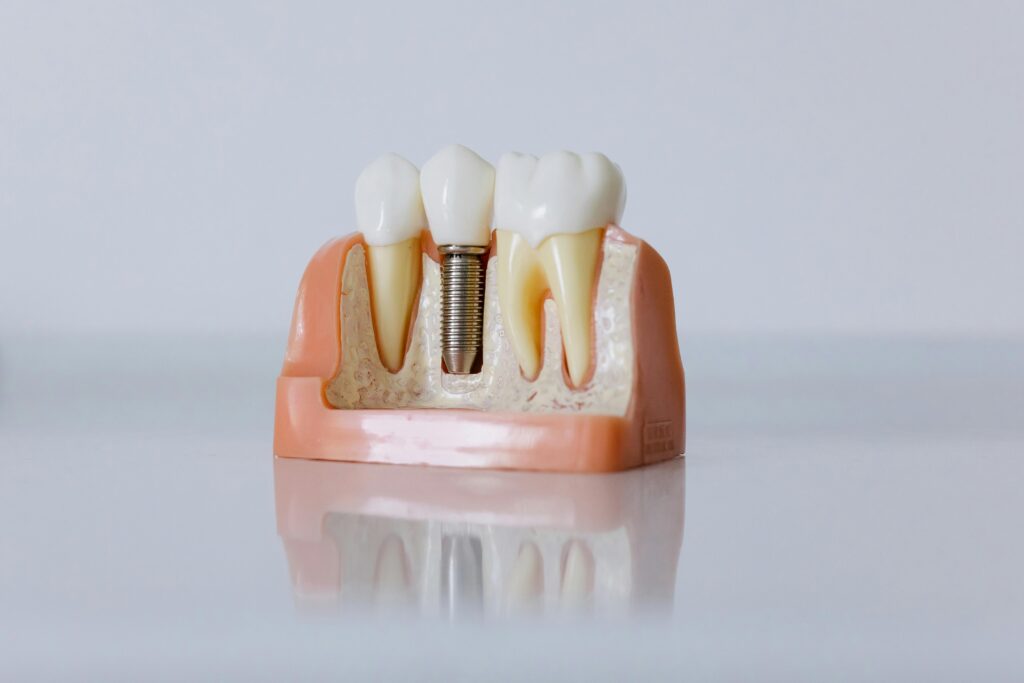
A dental implant is a modern tooth replacement solution that involves placing a titanium screw into the jawbone to act as an artificial tooth root. Once healed, a false tooth (crown) is attached to the implant, providing a permanent and natural-looking result. Unlike bridges, dental implants function like natural teeth and don’t require altering the teeth on either side. Though dental implants maycost more upfront and involve a longer healing time, they are often considered a more durable and independent solution in modern dentistry.
Type of Treatment with Dental Bridge and Implant
When it comes to tooth replacement, the two most common dental restoration options are dental bridges and implants. Depending on the number of missing teeth, the health of surrounding teeth, and other factors, a dentist may recommend different treatment types.
Dental Bridge Options:
Traditional dental bridge – relies on teeth on either side of the gap (requires crowns).
Cantilever bridge – supported by one adjacent tooth.
Maryland dental bridge – uses a clip or metal/porcelain framework bonded to the back of neighboring teeth.
Implant-supported bridge – ideal for replacing multiple teeth, supported by implants instead of natural teeth.
Partial bridge – used when some natural teeth remain.
Dental Implant Options:
Single dental implant – for replacing one missing tooth.
Multiple implants – for replacing two or more missing teeth.
Implant-supported dentures or bridges – suitable for full arch tooth replacement.
Mini implants – used in limited bone cases or as temporary alternative.
All-on-4 treatment – full arch dental care with only four implants.
Each treatment type has its pros and cons, and the cost of dental implants may be higher than bridges initially, but implants cost more upfront due to surgical procedures and titanium materials. However, dental implants function like natural teeth, offering durability and bone support. Always consult a dentist to choose the best tooth replacement for your needs.
Dental bridge vs. implant
When comparing dental implants and bridges, many people consider dental bridges a more convenient or affordable short-term solution. Let’s take a look at the advantages and disadvantages of each construction.
Dental bridge pros
Dental bridges are generally considered a practical choice in several cases. Among the advantages:
Likely to be covered by insurance, making them more accessible.
Doesn’t require bone grafting or invasive surgery, which can be needed for implants.
Usually lower upfront cost than dental implants, especially for single tooth replacement.
Typically requires only two visits to your dentist, completed within a couple of weeks.
A faster way to replace missing teeth, compared to dental implants.
Dental bridge cons
However, when compared to dental implants, bridges come with certain limitations:
Bridge may need replacement every 5 to 7 years, though some last longer with proper dental care.
Can lose a natural-looking appearance over time, affecting aesthetics.
More cavities and tooth decay in surrounding teeth, as bridges rely on adjacent teeth for support.
May damage healthy teeth around the missing tooth, unlike implants that don’t impact neighboring teeth.
Dental implant pros
Dental implants are often viewed as a more permanent and reliable solution for missing teeth. Dental implant benefits:
Can last 15 years or more, making them the longest-lasting fix available.
Retain a natural-looking appearance much longer than dental bridges or veneers.
Don’t damage healthy teeth around the implant, unlike bridges that rely on adjacent support.
Have a very high success rate, with around 97% at 10 years, making them a trusted option that works well for many patients.
Cons of dental implants
Despite their advantages, dental implants require more time and investment up front:
Less likely to be covered by insurance, making them more expensive initially.
The full process can take up to 6 months, depending on healing and bone integration.
Higher upfront cost, especially compared to bridges.
Surgical placement may lead to complications, such as infection or implant failure in rare cases.
When deciding between dental bridge or implant, think not only about the immediate fix but also about the long-term health of your mouth.
Implant vs. bridge cost
When comparing dental bridge vs implant cost, bridges are generally the more affordable option upfront. Dental implants and dental bridges differ in pricing due to surgery and materials involved. While dental bridges are more likely to be covered by insurance, dental implants can be used for a longer-lasting solution despite the higher initial cost.
How to choose between an implant and a bridge
When deciding between dental implants or a bridge, consider the following factors:
Cost;
Number of missing teeth;
Overall health;
Time.
Other options instead of bridges or implants
Besides dental bridges and implants, there are other options to consider for replacing missing teeth:
Partial dentures: removable prosthetics that replace several missing teeth and restore function and appearance.
Space maintainers: devices used mainly in children to keep the space open after a tooth is lost, ensuring proper alignment for permanent teeth.
These alternatives can be suitable depending on your dental needs and treatment plan.
How to choose what’s right for you
Choosing between dental implants vs dental bridges is always personal. It’s a question of individual preferences:
How much treatment are you willing to go through?
How quickly do you want this done?
How do you feel about oral surgery?
How much effort will you put into keeping it clean?
And what about the issues of replacements and cost?
These questions help determine the better option for your needs and lifestyle.
Dental bridge vs dental implant – Conclusion
When choosing between a dental bridge or dental implant, it’s important to weigh the pros and cons of each option based on your needs. Dental bridges offer a quicker and often less expensive solution, while implants provide a longer-lasting, natural-feeling replacement.
Ultimately, the decision depends on factors like the number of missing teeth, overall health, and personal preferences. Consulting with your dentist will help determine whether an implant is the right choice or if you should opt for a dental bridge.
Visit Dynasty Stomatology in the Czech Republic for a professional consultation on replacing one or more missing teeth. We offer expert advice on dental bridges and dental implants, helping you understand the difference between these options.
Let us help you restore your smile with personalized dental care.
FAQ:
What looks more natural, a dental implant or a dental bridge?
Dental implants look more natural because they function like real teeth and preserve the tooth root area.
What will cause less damage to my surrounding teeth?
Dental implants cause less damage since they don’t rely on neighboring teeth like dental bridges do.
What procedure will give me the results I want the fastest?
Dental bridges usually provide faster results as the implant process takes longer due to healing time.
What lasts longer, a dental implant or a dental bridge?
Dental implants typically last longer, often over 15 years, compared to dental bridges.
Can I switch from a dental bridge to an implant later?
Yes, many candidates for dental implants start with a bridge and later opt for an implant if suitable.
Is bone loss more likely with bridges or implants?
Bone loss is more common with dental bridges since implants help preserve the jawbone.
Which option is better if I grind my teeth (bruxism)?
Implants are usually better for patients with bruxism as they are more stable and durable.
How does smoking affect the success of implants compared to bridges?
Smoking can reduce the success rate of dental implants more than it affects dental bridges.
Can both bridges and implants be placed immediately after tooth extraction?
Bridges can often be placed sooner, while implants require time for the implant to be placed and heal.
What kind of maintenance does each option require long-term?
Both require good dental care, but implants need regular check-ups to monitor the implant site.
Which option is more suitable for elderly patients with chronic conditions?
Dental bridges may be better for some elderly patients, but it depends on overall health and dentist advice.
Are there aesthetic differences between bridges and implants in the front teeth?
Implants generally provide a more natural look, especially in the visible front teeth area.
Is it possible to combine implants and bridges in one treatment plan?
Yes, dental bridges and dental implants can be combined for multiple missing teeth.
How do food restrictions differ after getting a bridge versus an implant?
Implants allow fewer food restrictions once healed; bridges might require avoiding very hard foods.