The trust in Dynasty Stomatology is built on a combination of many years of experience and an individual approach to every patient. We understand that a visit to the dentist is often accompanied by anxiety, so we place special emphasis on creating a comfortable and calm atmosphere where every patient feels safe.
The clinic is equipped with modern technology and uses advanced treatment methods, ensuring that procedures are carried out with maximum precision, efficiency, and comfort. All materials undergo strict quality control, and our doctors regularly improve their qualifications to offer only the most up-to-date and proven techniques.
In addition, Dynasty Stomatology values long-term relationships with patients. Our goal is not only to solve the problem at hand but also to maintain the health of teeth and gums for years to come. Openness, honesty, and transparency are the key principles that have earned the clinic its reputation as a reliable dental partner.
Facts about Dynasty Stomatology:
✅ Over 10 years of successful work in dentistry.
✅ Hundreds of positive reviews from patients in [Страна в соответствии с регионом] and abroad.
✅ We use premium materials from leading global brands.
✅ We offer treatment under sedation and general anesthesia.
✅ A full range of services — from pediatric dentistry to complex surgical operations.
Dynasty Stomatology — trust, expertise, reliability, and care for the beauty of your smile.
Dynasty Stomatology’s doctors conduct medical reviews of all materials on the website to ensure their accuracy and practical value. Our authors and editors are experienced specialists in the fields of therapeutic, surgical, orthopedic, and pediatric dentistry. This approach allows us to maintain high professional standards and provide our readers with only verified, up-to-date, and useful information.
We rarely consider dental surgery until a problem becomes obvious. A small crack in a tooth, occasional pain when chewing, or bleeding gums might seem like they’ll soon resolve. But sometimes conventional treatment isn’t enough, and a dentist might suggest a procedure.
We understand that for many patients, this sounds alarming and scary. Questions may immediately arise, such as how painful it is, whether surgery is possible, and so on. But in reality, modern dental surgery is a precise, controlled, and predictable field of medicine. It aims to maintain health, restore function, and prevent more complex complications.
Today, surgical procedures allow us to treat infections, restore bone tissue, place implants, and correct jaw anatomical features. All of this is part of a comprehensive approach to oral health.
In this article, we’ll explore what dental surgery involves, when it’s truly necessary, and how treatment progresses, from preparation to full recovery.
What is Oral Surgery?
Oral procedure is a branch of dentistry that treats complex conditions affecting the teeth, gums, jawbone, and surrounding tissues.
Simply put, surgery in dentistry is any intervention that involves incision, removal, or correction of tissue.
Each surgical procedure is aimed at restoring function and eliminating pain. Modern oral surgeries are performed using digital diagnostics and precision instruments.
Common Types of Dental Issues Treated by an Oral Surgeon
There are dental issues that may require surgical intervention, especially if the disease is advanced or affects the bone and surrounding tissue. In such cases, the doctor considers a surgical approach as a way to eliminate the underlying cause. Below, we list the main conditions for which surgical treatment is used.
Abscessed teeth
An abscess is a purulent inflammation in the area of a tooth root or gum. It causes pain, swelling, and may be accompanied by fever. In such cases, surgery is essential to address the source of the infection. The doctor incises the lesion, removes the pus, and cleans the affected tissue. If the tooth cannot be saved, it is extracted to stop the inflammatory process.
Broken teeth
Trauma or deep decay can destroy a tooth down to the root. If the damage extends below the gum, standard treatment is no longer effective. In complex cases, a full-scale tooth extraction surgery is performed, which involves making an incision in the gum and carefully removing the tooth piece by piece.
Bone loss in your jaw
Bone atrophy occurs after tooth extraction or with chronic inflammation. Insufficient bone volume complicates subsequent prosthetic restoration. Depending on the situation, jawbone surgery or dental bone grafting is performed. The procedure restores bone volume and creates a foundation for further treatment.
Extensive tooth decay
This is deep tooth decay, affecting most of the crown and possibly extending all the way to the root. In such cases, fillings are no longer effective, and the risk of inflammation and infection increases significantly. If the tooth cannot be restored with therapeutic methods, surgical extraction is performed.
Impacted teeth
Impacted teeth do not fully erupt and remain embedded in the bone or under the gum. This most often affects wisdom teeth. In such cases, wisdom tooth removal is performed. This surgery helps prevent inflammation, pressure on adjacent teeth, and chronic pain.
Loose or missing teeth
Tooth loss impairs chewing function and, over time, leads to bone loss. Dental implant surgery is the solution. A dental implant is inserted into the bone, acting as an artificial root. After healing, a crown is secured, and the implant itself restores full function and aesthetics.
Oral cancer
Any suspicious growths in the oral cavity require diagnosis. If the diagnosis is confirmed, surgical removal of the affected tissue is performed. Such interventions are performed by an oral surgeon. Their goal is to completely remove the growth and reduce the risk of recurrence.
Treatment Spectrum of Dental Surgery
There are different types of dental surgeries, selected depending on the diagnosis, the extent of tissue damage, and the patient’s overall condition. Below, we’ll examine the main procedures in more detail.
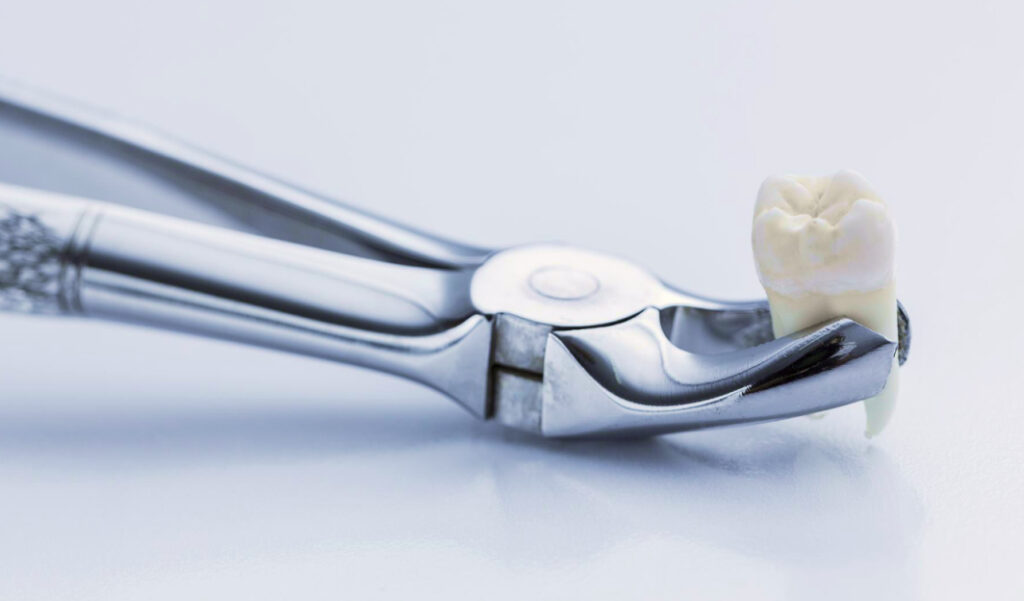
This is one of the most common surgeries. Wisdom teeth often emerge abnormally, press on adjacent teeth, or remain partially hidden under the gum. This can cause inflammation, pain, and dental misalignment. During the procedure, the dentist carefully frees the tooth from the surrounding tissue and removes it, minimizing trauma.
Removal of severely damaged teeth
If a tooth is destroyed by decay or trauma down to the root, its preservation becomes impossible. Surgical removal is performed carefully, preserving the surrounding bone and gums. This is especially important if implantation or prosthetics are planned for the future.
Apicoectomy procedure
This is the surgical removal of the apex of the tooth root along with the inflamed tissue. The procedure is performed when repeated root canal treatment is ineffective. The doctor makes a small incision in the gum, removes the infected portion of the root, and seals the canal. This approach preserves the tooth and prevents the recurrence of the infection.
Dental osteotomy
Osteotomy is classified as a hard tissue oral surgery procedure. It is used for complex extractions of impacted teeth or in preparation for other surgical procedures. The surgeon carefully dissects the bone to access the tooth or correct its shape. Despite the serious nature of the procedure, modern technology allows it to be performed with extreme precision.
Correction of the lip and tongue frenulum
This procedure is referred to as soft tissue oral surgery. It is performed when the tissue is excessively tight or improperly attached. This problem can cause speech impairment, discomfort when chewing, or contribute to the formation of gaps between teeth.
Bone augmentation or sinus lift
Sinus lift surgery is used in the upper jaw when the bone volume is insufficient for implant placement. During the surgery, the doctor lifts the sinus lining and adds bone material. This creates sufficient bone volume to support dental implants. The procedure allows for safe implant placement even in cases of severe bone atrophy.
Removal of cysts in the mucous membrane or jaw
Cysts in the mucous membrane or jaw often develop asymptomatically and are discovered incidentally on an X-ray. However, as they grow, they can destroy bone tissue, put pressure on adjacent teeth, and cause inflammation. Cyst removal is performed surgically. The doctor carefully opens the affected area, removes the cystic formation, and cleans the cavity. If necessary, the cavity is filled with a special material to restore the bone structure.
Operations following accidents
Surgeries after injuries are aimed at restoring anatomy and function. The doctor immobilizes damaged areas, restores the position of teeth, and performs tissue reconstruction if necessary.
Treatment of abscesses in the oral cavity
A purulent accumulation in the oral cavity can occur not only in the area of the tooth root but also in the soft tissues. This condition is accompanied by pain, swelling, and a deterioration in general well-being. Abscess treatment involves surgical incision and drainage of the abscess. The doctor removes the purulent contents, cleans the affected tissue, and, if necessary, prescribes medication. The main goal is to eliminate the source of the infection and prevent its spread to adjacent structures.
What’s the Difference between Oral Surgery and Maxillofacial Surgery?
Many patients confuse oral and maxillofacial surgery, thinking they are the same. In fact, they are different specialties.
Oral surgery is a branch of dentistry that focuses on surgical treatments within the oral cavity. It includes tooth extractions, infection treatments, gum surgery, implant placement, and other interventions involving the teeth, soft tissues, and jawbone within the oral cavity. These procedures are most often performed in a dental clinic under local anesthesia. The main goal is to eliminate pain, infection, and restore dental function.
Maxillofacial surgery is a broader medical specialty. It encompasses not only the oral cavity but also the facial bones, jaws, cheekbones, and even the soft tissues of the face. Oral and maxillofacial surgeons perform complex surgeries, including orthognathic surgery and corrective jaw surgery, which are aimed at correcting the bite and jaw position. Maxillofacial surgery is also used for serious facial injuries, fractures, tumors, and congenital anomalies. It is often performed in a hospital setting.
Preparing for a Dental or Oral Surgery Procedure
Preparing properly for oral surgery helps reduce dental surgical risks and ensures a smoother dental surgery recovery. Since oral surgery encompasses a wide range of procedures — from surgical tooth extraction to periodontal surgeries and dental implants — your preparation may vary slightly depending on the type of procedure.
Arrange transportation — If dental surgery anesthesia or sedation is used, you’ll need someone to drive you home.
Do not eat or drink before surgery —Your dentist or oral surgeon will tell you how long to fast before the procedure.
Pick up medications in advance —Having prescribed antibiotics or pain relievers ready supports proper post-operative dental care.
Plan time to recover —Recovery from a dental procedurevaries depending on the complexity of the treatment. Even minimally invasive dental surgery may require rest.
Follow oral hygiene instructions —Maintaining good oral hygiene before the procedure helps reduce possible dental surgery complications.
Oral Surgery Procedure: What to Expect During Your Dental Procedure
It’s normal to feel nervous before oral surgery. But understanding the process can reduce anxiety. That’s why we want to explain each step of the procedure in detail. Knowledge helps you make informed decisions about your oral health.
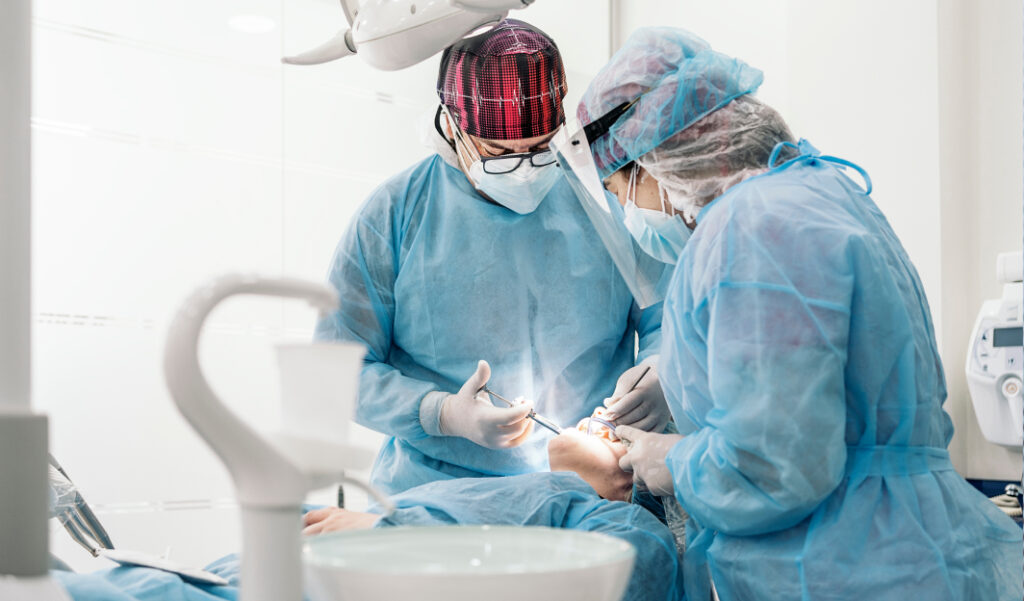
First, your provider administers local anesthesia so you don’t feel pain. Sometimes sedation is used, especially if the procedure involves complex procedures or advanced dental surgery.
Next, the dental surgeon makes a small incision inside your mouth. Using precise oral surgical techniques, they perform the necessary dental surgical treatment. The procedure involves different steps depending on the situation — this may include tooth removal, bone reshaping, or the placement of dental implants. In some cases, additional procedures such as gum grafts are performed to restore healthy tissue.
After completing the required surgical procedures involving the mouth, the doctor carefully closes the incision with stitches to support healing.
At every stage, dental specialists care about your safety and comfort. Oral surgery plays a crucial role in maintaining and improving dental health and resolving serious oral health issues with care and precision.
What Happens after Oral Surgery?
Healing begins immediately after the procedure. Following proper post-operative dental care is essential for a smooth recovery.
During the first 24 hours, avoid spitting, using a straw, or rinsing too forcefully, as this can disrupt healing. Rest, limit physical activity, and carefully follow your doctor’s instructions. Take prescribed medications as directed and use cold compresses if recommended to reduce swelling.
Recovery from dental surgery varies depending on the complexity of the procedure. Some treatments heal within a few days, while others may require more time.
In general, dental surgery recovery may take from several days to a few weeks.
The Benefits of Oral Surgery
Dental surgery encompasses a wide range of treatments, from preventive care to complex reconstructive procedures. Understanding the benefits helps the patients make informed decisions about their oral health and calmly consider possible types of surgery.
Better Oral Health —Surgical treatment helps eliminate infection, inflammation, and other oral health issues. In some cases, a procedure is essential for addressing problems that cannot be resolved with standard dental procedures.
Aesthetic Transformation — Various types of oral surgery help restore the harmony of a smile. For example, dental implants are a popular solution for replacing lost teeth and restoring a natural appearance.
Functional Restoration —Procedures performed on the teeth and bone tissue help restore full chewing and proper weight distribution. Restoring bone to support dental implants promotes optimal oral health.
Pain Relief —Some common types of oral procedures aim to eliminate chronic inflammation, cysts, and complications. This helps significantly improve oral health and enhance quality of life.
Complication Prevention —Procedures like wisdom tooth removal prevent potential future problems. In such cases, surgery may be necessary as a preventative measure.
What are the Risks or Complications of Oral Surgery?
Any surgical procedure carries certain risks. Although serious complications are rare, it’s important to be aware of possible reactions and carefully follow your doctor’s instructions.
Infection is a possible inflammation at the site of the procedure, which may be accompanied by pain, swelling, or fever. It is usually successfully controlled with prompt treatment.
Injury to neighboring teeth is the risk of damage to adjacent teeth or fillings during a complex procedure, especially if access to the problem tooth is limited.
Dry socket is a condition after tooth extraction in which the blood clot becomes dislodged or does not form properly, causing discomfort and delayed healing.
Numbness is temporary numbness of the lips, chin, or tongue due to nerve irritation. In most cases, sensitivity gradually returns.
Tooth fragments left behind are sometimes left behind during complex extractions. These are monitored by the doctor and removed if necessary.
Sinus perforation is a rare complication of maxillary surgery associated with the formation of a small hole in the maxillary sinus.
Recovery and Outlook after Dental Surgery
Recovery after oral surgery is very important. Recovery time depends on the complexity of the procedure, from common types of oral surgery, such as surgical tooth extraction, to more complex procedures, such as flap surgery or implant placement. Proper postoperative care helps reduce the risks and complications of oral health.
What is the recovery time?
Recovery varies based on the complexity of the procedure and individual factors. Simple procedures may require just a day or two of rest, while various types of dental procedures may take several days or even weeks. Your dental surgeon will provide guidance on healing expectations and follow-up visits.
Recovering from oral surgery
Proper post-procedure care accelerates healing and prevents complications. We’ve compiled the following key recommendations:
Avoid spitting and vigorous swishing. These actions can disturb sutures or blood clots, slowing healing after different types of oral surgery.
Give yourself at least 48 hours before exercising. Physical activity increases blood pressure and heart rate, which can lead to bleeding.
Keep your head elevated for the first few days to minimize swelling and discomfort.
Stock your pantry with soft foods such as yogurt, soup, pasta, mashed potatoes, pudding, eggs, and rice. Eating gently protects the surgical site.
Take all medications exactly as prescribed. Following instructions for pain relief, antibiotics, or anti-inflammatories is essential for maintaining oral health.
Use heat and cold therapy. Cold packs help reduce swelling initially, while gentle heat can relieve tension and soreness later.
Summary of Dental Procedures for Overall Oral Health
Modern dentistry offers a wide range of different types of dental surgeries, from common types of oral surgery like gum surgeries and periodontal surgeries to advanced procedures performed by oral and maxillofacial surgeons, including dental implant surgery and orthognathic surgery. Surgery is essential for addressing complex dental issues, and understanding the different types available helps you make informed decisions about your smile. In the world of dental surgery, caring for your teeth and gums is key to overall oral health.
At Dynasty Stomatology, our experienced dental surgeons guide you through personalized treatment plans, resolving concerns about your oral health and ensuring the best outcomes for function, aesthetics, and long-term well-being.
Frequently Asked Questions About Surgical Procedure and Common types of Dental Surgery
Which procedures are considered to be dental surgery?
Surgical dental treatment includes a wide range of interventions, from surgical tooth extraction and periodontal surgery to dental implants, sinus lift surgery, and corrective jaw procedures. This comprehensive guide to oral surgery helps patients understand which procedures fall under this category and why they are necessary for overall oral health.
How are dental surgeries performed?
Surgeons are highly trained dental specialists who use precise oral surgical techniques. Procedures often involve local anesthesia, sedation, or general anesthesia, depending on complexity. Small, careful incisions and advanced instruments ensure minimal trauma and faster recovery.
Does dental surgery hurt?
Most procedures are performed under anesthesia, so you shouldn’t feel pain during the surgery. Some discomfort or swelling afterward is normal, but your dentist or oral surgeon will provide medications and guidance for post-operative dental care to minimize pain.
In which situations might I need a sinus lift?
A sinus lift surgery is often required when there isn’t enough bone to support dental implants. This crucial role in maintaining oral function ensures implants are stable and long-lasting.
In which situations might I need gum correction surgery?
Periodontal surgery is a procedure that is considered when gum recession, deep pockets, or inflammation threaten your teeth or overall oral health. Such procedures restore tissue, reduce infection risk, and improve aesthetics.
How do I know if I need dental surgery or a non-surgical treatment?
Your dentist or oral surgeon will evaluate your teeth, gums, and jaw. A procedure is often recommended when non-surgical treatments cannot fully resolve the problem, like severe decay, impacted teeth, or bone loss. Considering oral surgery early can prevent further complications.
Who performs dental surgery — a general dentist or a specialist?
Simple extractions or minor procedures may be done by a general dentist. More complex cases, including implants or corrective jaw surgery, require choosing the right oral surgeon, as surgeons are highly trained dental professionals with expertise in various oral procedures.
What types of anesthesia are available for dental surgery?
Anesthesia options range from local anesthesia to sedation or general anesthesia. The choice depends on the type of procedure and your comfort level. Your dentist will tailor it for safety and minimal discomfort.
How long do the results of dental surgery usually last?
With proper care, most surgical results are long-lasting. For example, dental implants, bone grafts, or like dental restorative procedures can last decades with good maintaining oral hygiene and regular check-ups.
Are there age limits for undergoing dental surgery?
Most procedures can be performed on both young and older patients. Your overall health, bone structure, and healing capacity are considered during surgical treatment planning.
Can dental surgery be postponed, or does it need immediate treatment?
Some interventions, like infection control or pain relief, may need urgent attention. Others, such as elective implants or cosmetic procedures, can be scheduled. Understanding timing is part of comprehensive guide care planning.
How should I care for my mouth immediately after dental surgery?
Follow your post-op instructions carefully: avoid spitting, use recommended rinses, eat soft foods, and take medications as prescribed. Proper care plays a crucial role in maintaining oral health and preventing complications.
When should I contact my dentist after surgery if something feels wrong?
Contact your dentist immediately if you experience severe bleeding, persistent pain, high fever, swelling that worsens after 3 days, or signs of infection.
Can dental surgery affect my overall health or existing medical conditions?
Yes, oral health is closely linked to systemic health. Inform your dentist about any conditions like diabetes, heart disease, or medications. Proper planning ensures a role in maintaining oral health while minimizing risks.
How soon can I return to normal eating and daily activities after dental surgery?
Recovery varies based on procedure complexity. For various types of dental surgery, light activity and soft foods may resume within a few days, while more complex interventions like implants or periodontal surgery may require longer. Your dental work plan will guide the timeline.
Choosing the Right Oral Surgeon for Your Types of Oral Surgery
At Dynasty Stomatology, our skilled dental surgeons provide personalized care, guiding you through every step of the treatment. Schedule a consultation today to discuss your dental needs, explore suitable procedures, and take the first step toward a healthier, more radiant smile.