
Implant or bridge — how not to make a mistake when choosing if you have lost one tooth
04.03.2026
90
5 min. read
Why Patients Trust Dynasty Stomatology
The trust in Dynasty Stomatology is built on a combination of many years of experience and an individual approach to every patient. We understand that a visit to the dentist is often accompanied by anxiety, so we place special emphasis on creating a comfortable and calm atmosphere where every patient feels safe.
The clinic is equipped with modern technology and uses advanced treatment methods, ensuring that procedures are carried out with maximum precision, efficiency, and comfort. All materials undergo strict quality control, and our doctors regularly improve their qualifications to offer only the most up-to-date and proven techniques.
In addition, Dynasty Stomatology values long-term relationships with patients. Our goal is not only to solve the problem at hand but also to maintain the health of teeth and gums for years to come. Openness, honesty, and transparency are the key principles that have earned the clinic its reputation as a reliable dental partner.
Facts about Dynasty Stomatology:
✅ Over 10 years of successful work in dentistry.
✅ Hundreds of positive reviews from patients in Poland and abroad.
✅ We use premium materials from leading global brands.
✅ We offer treatment under sedation and general anesthesia.
✅ A full range of services — from pediatric dentistry to complex surgical operations.
Dynasty Stomatology — trust, expertise, reliability, and care for the beauty of your smile.
Learn about usMedical Expertise
Dynasty Stomatology’s doctors conduct medical reviews of all materials on the website to ensure their accuracy and practical value. Our authors and editors are experienced specialists in the fields of therapeutic, surgical, orthopedic, and pediatric dentistry. This approach allows us to maintain high professional standards and provide our readers with only verified, up-to-date, and useful information.
Losing even one tooth does not seem critical. Chewing does not seem to be greatly affected, your smile remains almost unchanged, and the thought “I’ll do it later” seems quite logical. It is at this point that most patients begin to postpone their decision.
At Dynasty Stomatology, we regularly see what this leads to: tooth displacement, overload of adjacent areas, bone loss, and more complex and expensive treatment options in the future. Therefore, the key question is not only what to choose, an implant or a bridge, but when and why.
Why losing a single tooth should not be ignored
When a tooth disappears, the body adapts to the new circumstances. The load during chewing is redistributed to the adjacent teeth, which gradually tilt towards the empty space, and the bone, which no longer receives the load, begins to lose volume.
This process is slow and almost imperceptible, but it is precisely this that complicates treatment over time. What can be resolved relatively easily today will require additional procedures in a few years.
What is the fundamental difference between an implant and a bridge?
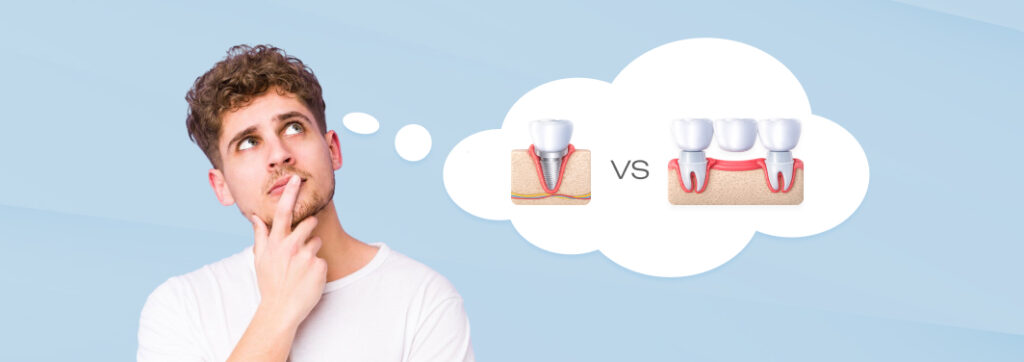
Dental bridges and implants serve the same purpose — to correct a defect. However, they do so in different ways.
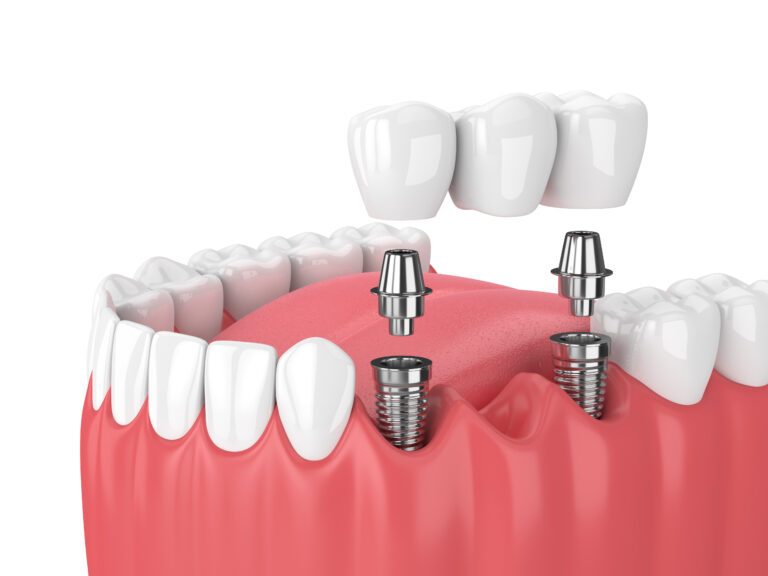
A bridge is a structure that is fixed to two adjacent teeth. To install it, these teeth are ground down and used as supports. Visually, the defect disappears, and chewing function is restored, but the load is transferred to the supporting teeth.
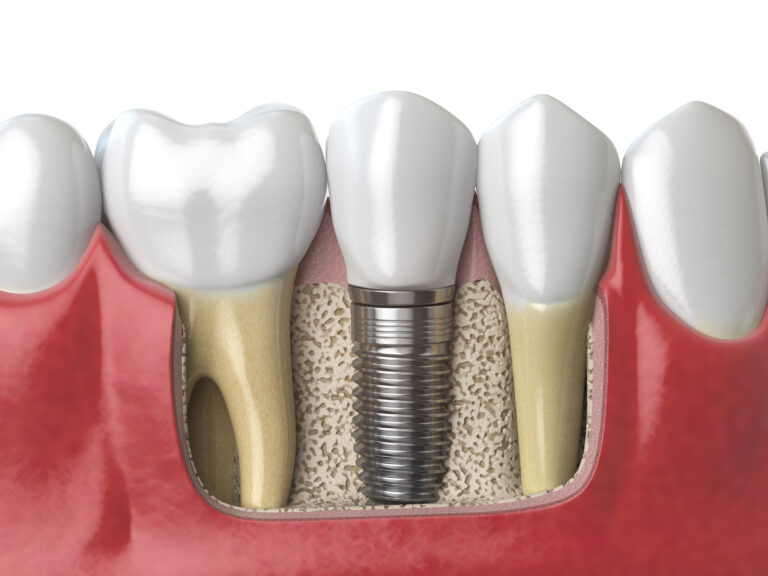
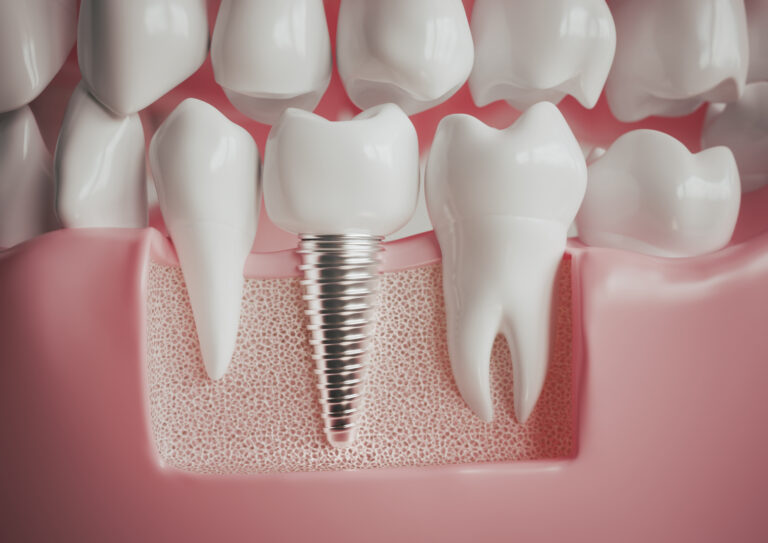
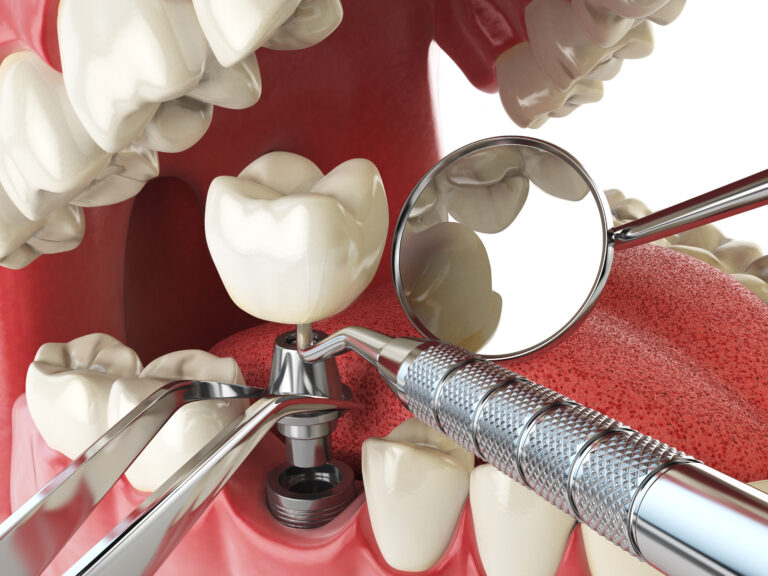
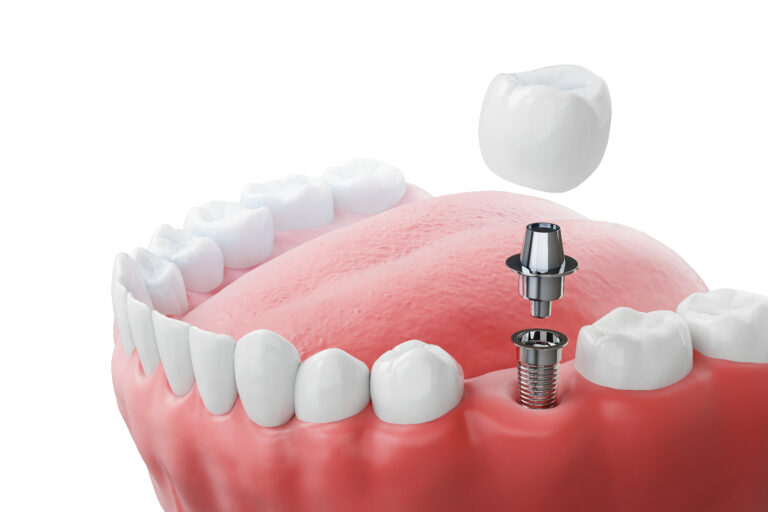
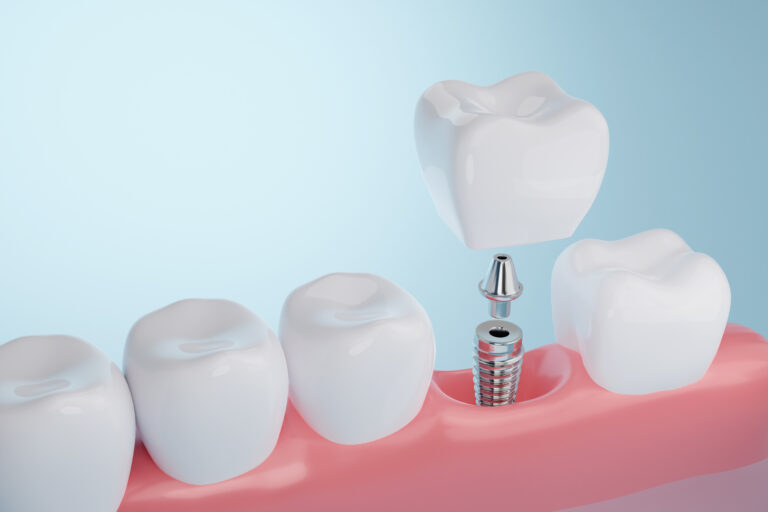
An implant is a titanium root that is inserted directly into the bone at the site of the lost tooth. It bears the load in the same way as a natural tooth and does not affect neighbouring teeth.
| Characteristic | Dental bridge | Implant |
| Impact on adjacent teeth | Requires filing of healthy teeth | Adjacent teeth remain alive |
| Bone tissue | The bone under the bridge atrophies over time. | The implant stimulates the bone, preventing atrophy. |
| Service life | 5–10 years | 20+ years (often for life) |
| Aesthetics | Looks good, but a gap may appear over time | Looks like a natural tooth |
| Price | Cheaper | More expensive, but more profitable in the long run |
| Installation period | 1–2 weeks (usually in 2–3 visits) | 3 to 6 months (full cycle with engraftment). |
In fact, a bridge is a compromise solution, while an implant is a restoration of a lost tooth that is as close as possible to the natural anatomy.
What happens to neighbouring teeth and bone
One of the most important things that patients often don’t think about is the long-term consequences.
When a bridge is installed, the supporting teeth are forced to constantly withstand additional stress. Over the years, this can lead to their overload, increased sensitivity, or even the need for retreatment. In addition, under the bridge itself, where there is no tooth, the bone does not receive any stress and begins to gradually decrease in volume (atrophy).
Why is bone atrophy a problem? Bone tissue holds the shape of the face. When it resorbs, it can lead to:
- changes in facial symmetry;
- premature wrinkles;
- slight sinking of the lips in the area of the lost tooth.
An implant, on the other hand, replaces the root, stimulates the bone, and prevents its atrophy. That is why, from a physiological point of view, it is considered a more stable and durable solution that helps to preserve the natural appearance of the face.
Comfort and sensation in everyday life
A bridge is often perceived as a quicker and easier solution. Indeed, in some cases, it can be installed in a shorter period of time. However, patients are not always aware that it is more difficult to maintain hygiene under a bridge, and the feeling of “foreignness” can persist for years.
After engraftment, the implant is perceived as your own tooth. It does not interfere with chewing, does not create additional pressure, and does not require any special care habits other than standard hygiene.
When to choose a bridge
It is important to understand that a bridge is not always a bad option. In clinical practice, there are situations when it is justified. For example, if adjacent teeth have already been restored or have crowns, or if implantation is temporarily impossible for certain medical reasons.
That is why there is no universal answer that “implants are always better.” There is only an individual decision that is made after diagnosis.
Why implants are often more cost-effective in the long term
At first glance, bridges usually seem cheaper. But when you consider the possible risks of repeat work, treatment of supporting teeth, and the service life of the structure, the difference in price often disappears over time.
The implant is designed to last for decades and does not put additional strain on other teeth. That is why many patients who once opted for a bridge eventually return to the question of implantation.
How we approach selection at Dynasty Stomatology
At Dynasty Stomatology, before recommending an implant or bridge, we conduct diagnostics, assess the condition of the bone, adjacent teeth, and the overall situation in the oral cavity.
Our task is to help the patient understand the consequences of each option and make an informed choice, rather than simply closing the defect.
When to seek advice
If a tooth has already been lost or needs to be removed, there is no point in waiting for a “better moment”. The sooner you seek treatment, the simpler and more predictable it will be.
Make an appointment at Dynasty Stomatology to work with your dentist to choose a solution that will work not only today, but for years to come.


Do you want to treat your teeth while you sleep?
Schedule an appointment!
By clicking the button, you give your agreet your personal data in accordance with privacy policy.
Services related to this topic
All services-
Megagen implants in Prague
Have you lost your natural teeth? Searching for the perfect implantation system? The elite dental clinic Dynasty Stomatology offers a unique opport...
To the service -
Implants JD Dental
Have you lost one or more teeth? Then dental restoration is essential. Without it, your quality of life may significantly decline. You won’t be abl...
To the service -
Implants Straumann in Prague
Straumann implants in dentistry are high-quality implants that blend advanced technology with Swiss engineering. Thanks to this winning combination...
To the service -
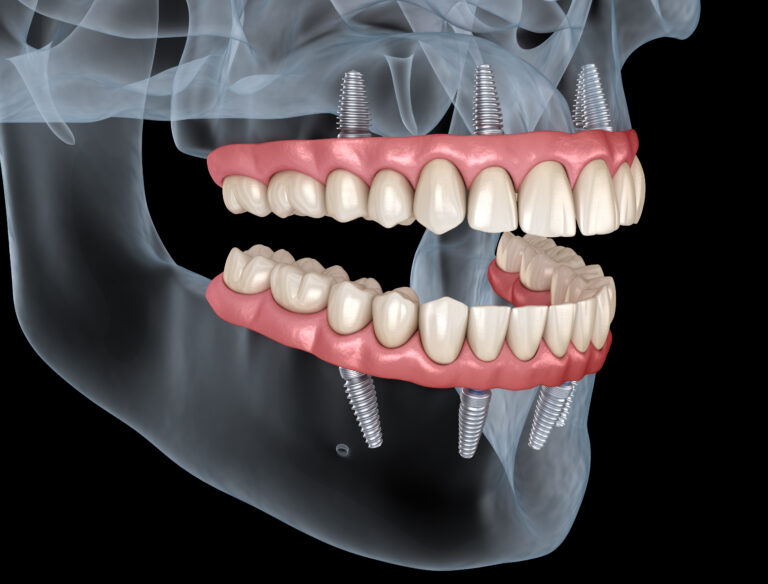
All-on-4 Implantation
All-on-4 dental implant is a modern solution for restoring a full arch of missing teeth using just 4 implants. This innovative implantation techniq...
To the service -
All-on-6 implantation
All-on-6 implantation is a reliable and modern method to restore a full arch of teeth on one jaw using six dental implants. This method allows for ...
To the service -
Implantation without surgery
Implantation without surgery using a surgical template is an innovative and minimally invasive method of restoring one or more missing teeth. Thank...
To the service -
Implantation in case of complete absence of teeth (edentia)
Complete edentulism is a condition where all teeth are missing on one or both jaws. This issue becomes especially common with age, trauma, or certa...
To the service -
One-stage implantation (with immediate loading)
One-stage dental implantation with immediate loading is an advanced method of tooth replacement, where a dental implant and a temporary implant cro...
To the service -
Immediate implantation (immediately after tooth extraction)
One-stage implantation (immediately after tooth extraction) can be defined as a dental procedure, which involves implant placement right into the t...
To the service -
Dental implantation
Missing teeth can cause irreparable damage to your oral health and well-being if not arrested on time. Not only do they look ugly, but they cause s...
To the service

Read also
View all blog-
07.07.2026
9
13 min. read
Cavity – causes, symptoms and treatments
Most people think of tooth decay as simply a small hole in the tooth that will eventually need to be filled. In fact, it begins much earlier. Month...
Read more -
03.07.2026
31
8 min. read
Dental Pulpitis Treatment — Saving a Tooth From Pain and Loss
Have you ever experienced a sudden, sharp toothache? It might seem like a reaction to something cold or the aftereffects of eating something sweet....
Read more -
02.07.2026
36
12 min. read
How to Fix Tooth Sensitivity – The Complete Guide to Fast Relief and Permanent Solutions
Have you ever felt a sharp pain when taking a sip of hot coffee or eating your favorite ice cream? One day, everything was fine, but the next, your...
Read more -
30.06.2026
58
10 min. read
Endodontic Retreatment – Why Root Canal Treatment Sometimes Needs to Be Repeate
Most people believe that root canal treatment solves the problem forever. In most cases, this is precisely what happens. However, sometimes, after ...
Read more -
08.06.2026
79
9 min. read
What is Oral Thrush – Symptoms, Treatment and Prevention
Have you noticed a white coating on your tongue that doesn’t go away even after brushing your teeth? Or a strange burning sensation in your m...
Read more -
05.06.2026
70
8 min. read
Dental Care For Pregnant Women – What you need to know
Pregnancy affects nearly every part of the body — including teeth and gums. Many women notice bleeding gums, increased sensitivity, or sudden tooth...
Read more -
03.06.2026
146
11 min. read
What to Do After a Wisdom Tooth Extraction – a Guide to Healing and Care
Going to the dentist to have a wisdom tooth removed often brings fear and many questions, both before and after. For example, is it normal for my c...
Read more